Origins and Timeline
The name Arsenic (Latin arsenicum) comes from the Greek word arsenicon, originally based on a from the Persian word “az-zarmkh” for the yellow form of orpiment (Chemistry of the Elements, Chapter 13).
Cullen (2008, p2) reports that smelting of arsenic minerals to make bronze smoke dates back to 3000 BCE in Crete and the Western Mediterrean. The process likely presented a hazard to the metal workers in the form of a cloud of white arsenic.
Arsenic timeline
470 BCE – Democritus (Greece), reported by Pliny (79 BC) describes Amurca- olive oil solid/liquid residue used for treatment of blight or root worms; bird control using buried ashes; Sandarach – arsenic- used to control grape blight,
415 BCE -Hippocrates reported use of Arsenic sulfides to treat ulcers and cauterize tumors (Hayes – Pesticides studied in Man 1982 -)
129-216 CE –Galen follows school of Hippocrates in use of arsenic sulfides for ulcers & tumors
229 CE – Arsenic use to control fermentation of liquid must pressed from grapes (Geoponika – Sextus Julius Africanus , bottom of page 146, top of page 147)
229 CE – Sandarach as a scorpion repellant Geoponika
900 CE – Chinese use of Arsenic sulfide as insecticide (Luci Costa )
1007 CE – Avicenna reported use of Arsenic sulfides to treat ulcers and cauterize tumors following Hippocrates (Hayes Pesticides Studied in Man 1982
1150 CE – Arsenic used to control pest birds
1669 CE – Arsenic & honey as an ant bait (Lucio Costa)
1792 CE – Arsenic as rat poison (J Ag Chem 1976′; Smith & secoy K Konkola J Hist Med Allied Sci)
1786 CE – England -Arsenic in seed steeps for the control of smut diseases (Hale cited in Smith and Secoy J Ag Chem 1976)
1786 CE – The Abbe Tessier (Annals of Agriculture (1786) considered arsenic a dangerous seed treatment, Smith and Secoy report arsenic wheat steeps banned in France following deaths from high levels of arsenic in bread, although no details available
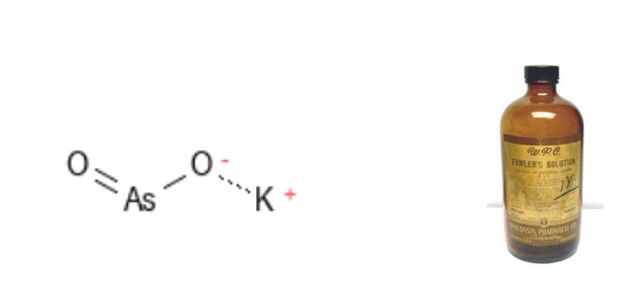
1786 CE – Fowler’s solution – 1% solution of potassium arsenite – used for malaria, syphilis, asthma, chorea, eczema, and psoriasis, syphilis; later as a cancer treatment
1854 -1900’s CE – India cattle poisonings, cases of deliberate human poisoning (see separate blog post)
-1858 CE – Bradford contamination of candy with arsenic substitution of gypsum for sugar in formulation, accidental replacement of grypsum by arsenic trioxide at wholesale pharmacy
1867-1870 CE – Colorado potato beetle, first use of synthetic pesticide (arsenical Paris green)
1885 CE – 15 Death, 500 poisonings, arsenic contaminated wine in Hyères and Toulon, France (JAMA 1932, J. M. Ramírez-Moreno Neurosciences and History 2023, P 84)
1889 CE – Poisoning of Bordeuax village with adulterated wine containing arsenic (Jackson’s Oxford Journal – “Where arsenic comes from”), Gale Trust
1900 CE – Manchester beer contamination, 3000 illnesses in Manchester area and Wales,
1910 CE -Ehrlich use of organoarsnic Salvarsan for treating syhphilis
1919 CE – Western apples, pears embargoed by the Boston Health Department for arsenic residues Portland Oregonian 1919 debate on Boston Recall of Arsenic Apples; A is for Arsenic pesticides WIRED Boston ban on apples 1919.pdf; am j public health 1936 Frisbie
1923 CE – Debate on elimination of $0.02/lb tariff on Ca Arsenate for boll weevil treatments
1925 CE – Importation of apples from US banned from Britain because of reported consumer illnesses
1926 CE – California Department of Agriculture begins testing fresh fruits, vegetables
1929 CE – 10 persons ill from Arsenic residue in flour used to bake Christmas fruit cakes
1930 CE – US continues war on British apple embargo
1932 CE – Arsenic contamination of wine, France, Spain, 300 poisoned sailors, 2 fatalities
1933 CE – USDA tolerances – 0.014 grain of As 0.025 /pound, 1926; progressivey lowered to international limit of 0.01 grain of of As/pound in 1932 Pb tolerance 0.014 grain/pound
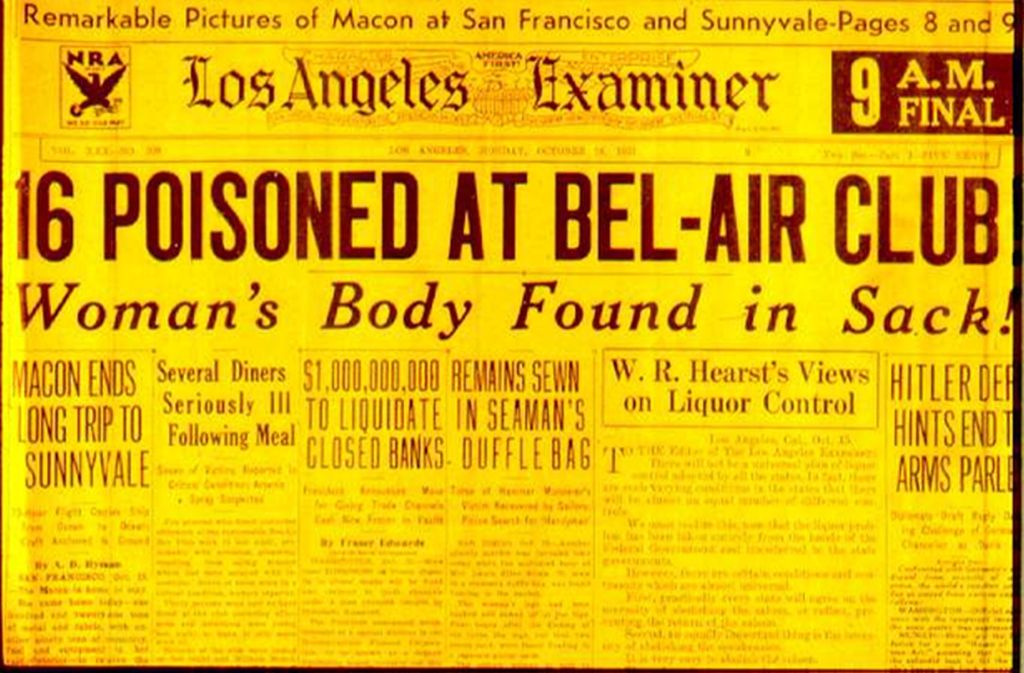
1933 CE –LA Bel Air club poisoning, arsenic contaminated vegetables
1936 CE- Federal regulation of spray residues
1959 CE- Hertfordshire well contamination resulted in poisoning of 1 fatal and 6 non-fatal poisonings
1971 CE- Arsenic pesticide buried near a well resulted in poisoning of farm workers who drank well water
1978 CE – Arsenic neuropathy associated with adulteration of wine in Extremadura & Badajoz district Spain ( Neurosciences and History 2023), sodium arsenate accidentally substituted for citric acidic trioxide
1994 CE – New Zealand cattle dip site evaluated for organochlorine and and arsenicals used historically. Soil samples showed arsenic (0 – 2,839 mg/kg), dieldrin & byproducts (0 – 8.60 mg/kg), lindane) (0 – 0.560 mg/kg), DDT & metabolites) (0 – 1.200 mg/kg), and endrin (0 – 0.127 mg/kg). Stream sediments showed As (0.9 – 32 mg/kg), dieldrin (0 – 0.038 mg/kg), and benzene hexachloride (α-BHC and β-BHC) – Asaeli Tulagi Waikato University Thesis
1994 CE- Residues of lead arsenate in former apple orchards, in the Georgia Bay region of Ontario, Canada -up to 210 ppm lead and 75 ppm of arsenic
1999 CE – Contamination at rural neighborhood in North Carolina, site of former apple orchard Barber farms, tested positive for benzene hexachloride (88 wells sampled, 34 contained BHC concentrations above the State standard of 0.019 parts per billion (ppb)., lead (ND -1,340 ppm) and arsenic (ND-1,340 ppm)
2003 CE- More than 50 years since use of lead arsenate in the Yakima Valley Median concentration Vs of arsenic in house dust equaled 9.0 mg/g and 4.2 mg/g in soil; Lead concentrations in housedust equaled 129 and 46 mg/g;
2004 CE – New England residues of prior use of lead arsenate
2006 CE – Use of lead arsenate during 1900’s felt to present risk of current soil contamination in Virginia – Average arsenic levels at Mint Spring Recreational Park 65.2 ppm, lead 354.5 ppm; and Snead Farm arsenic 107.6 ppm; lead 442.3 ppm, 3 other orchard sites tested showed no levels above expected background
2012 CE – Denise Wilson, Journal of Environmental Health, Arsenic and lead in apple and other juices from US, China, Australi, New Zealand, Argentina & Brazil – showed significant residues of arsenic & lead
2013 CE –10 former cattle dip sites evaluated and found to have l residues adjacent to dip sites 0.002 – 46.76 mg/kg arsenics Ramudzuli & Horn S African Medical Journal 2013
2013 CE – Arsenical herbicides were used extensively for emergent weed control in Hawaiian sugar cane cultivation from 1913 to about 1950. As a result, surface soil arsenic concentrations average 280 mg kg−1 across more than 60 km2 of former sugar plantation land in the eastern portion of the Island of Hawaii. (Science Total Environment 2013)
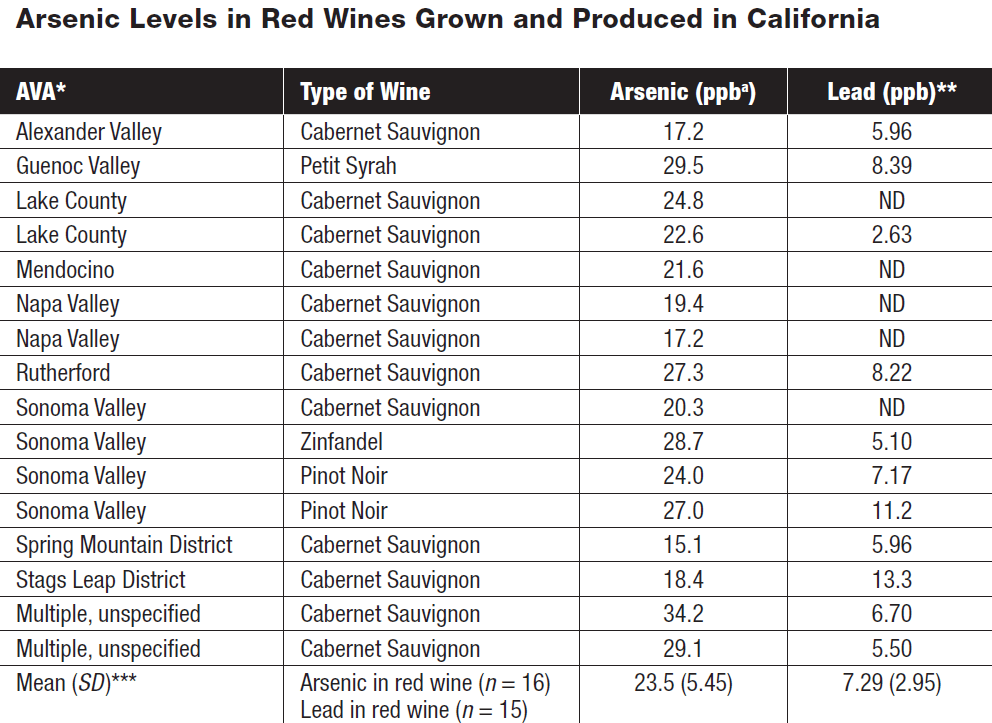
2015 CE –Denise Wilson, Arsenic content in American Wine, Journal of Environmental Health – All wine in purchased channels of trade had arsenic exceeding drinking water standard (10 ppb) and 58% tested positive for lead
2017 CE -Arkansas national forest site of former cattle dip found to have levels concentrations ranged from 18 to 715 mg/kg compared to background levels of 13 mg/kg
2017 CE – Legacy lead arsenate soil contamination at childcare centers in the Yakima Valley, Central Washington
2018 – CE – Arsenic exposure presenting with peripheral neuropathy, plantar rash, sheep worker 4812 μg per liter in urine and 323 μg per liter in the blood (reference range for both, <52); 55 μg per liter in the freshwater dams from which he had drunk (near Darwin, northern territory Australi). Contamination likely resulted from historic gold mining operation near the ranch where he worked. NEJM 2018
Arsenic as a medicine & poison
Historical use
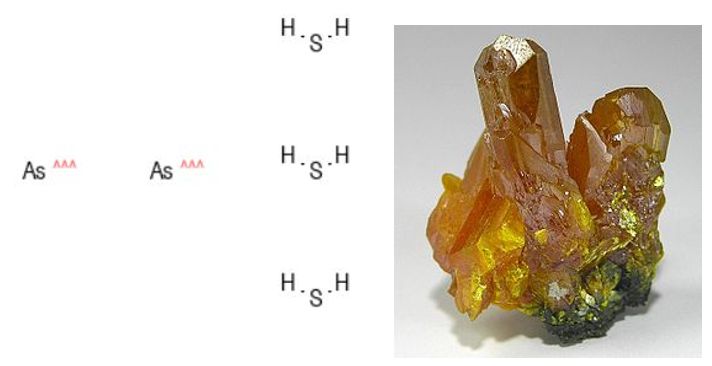
Use of arsenic sulfides (the minerals Realgar & Orpiment, shown below) as ,medications dates back to use by physicians of the Hippocratic school (-425 BCE to 1350 by physicians in the school of Galen) for cauterizing wounds and tumors (Hayes – Pesticides studied in Man 1982). Chinese practitioners (189 CE). used arsenic sulfides in treating dental caries.
Shen Nong’s materia medica (200 BCE) described both Realgar and Orpiment, as well as arsenolite, an arsenic oxide mineral (Culllen, 2008, p 3),. The book summarized a long tradition of prior use (likely predating reported use in Greece).

Modern use as a medicine
Modern use of arsenic as a medication began in approximately 1778 with Fowler’s solution (a 1% solution of potassium arsenite) sold initially as a patent medicine. Beginning in 1865 it began to but used to treat leukemia beginning in 1865 (Doyle Br J Haematology 2009).
Use as a war gas
Historical use as a poison
Cullen (2008) extensively discusses of arsenic as a poison, citing cases as far back as Mithridiades VI of Pontus (133-63 BCE), reported to have killed his family with arsenic.
He discussed possible poisoning of the emperor Claudius by his wife Agrippina, and poisonings during the renaissance era by the Borgias and others.
During the Victorian era, forensic tests for arseninc became available and established poisoning in a number of cases (Thomas Smethurst, Florence Maybrick, Herbert Armstrong, and Marie Besnard).
In colonial India criminal use of arsenic inlcude poisoning of cattle and cases of deliberate human poisoning (see post on India Cattle poisonings)
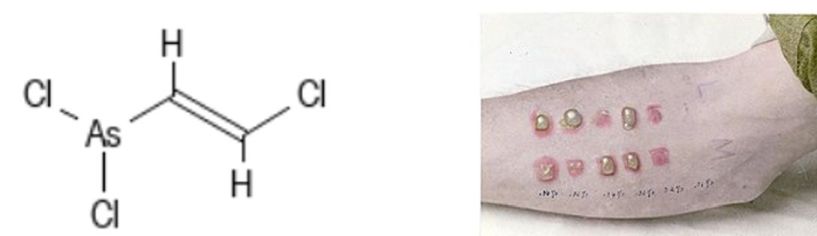
War gases gases used in world WW I included Lewisite (intended to counter use of mustard gas); reported use did not occur until Italian attack on North Africa and early phase of Japanese attacks of China in WW II (Stanford Magazine, 2005, the WMD that wasn’t.)
Arsenic pesticides
1867 – 1870 -beginnings of pest management with synthetic pesticides
The modern use of synthetic pesticides began with the introduction of Paris green (copper acetoarsenite) for control of Anopheles gambiae infestation in Brazil, 1867, cited in Jacques Derek Charlwood 2019) and the Colorado potato beetle (Williae LeBaron, Illinois State Entomologist, June 1870 -Waukegan Gazette).
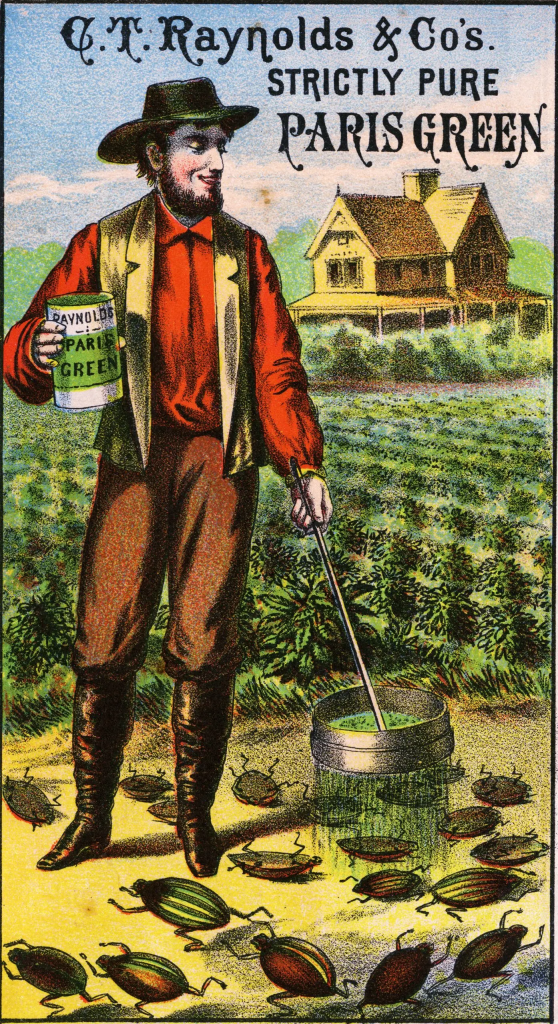
Subsequently the arsenical pesticides had increasing use for control of common agricultural pathogens, for vector control, and household pests.
Estimates of agricultural arsenical use 1930’s – 1970
In 1934, a farm historical society reported use of 80-90 million pounds of arsenical pesticides in the U.S. (along with sulfur, kerosene, mineral oil, naphthalene compounds and pyrethrum) https://livinghistoryfarm.org/farming-in-the-1930s/pests/early-pesticides/
In 1950 estimated use included calcium arsenate (38,842 lb) and lead arsenate(27,490 lb), (Plimmer Handbook of Pesticide toxicology).
The USDA Agricultural census data show peak use during the 1940’s, with decreasing use after WW II as alternative materials became available.

Episodes of contamination leading to poisoning
1786 –Use of Arsenic banned in France following muliple deaths from high levels of arsenic in bread – Tessier, The Abbe, Annals of Agriculture 6, 199 (1786). cited in Smith and Secoy J Ag Chem 1976. Neither publication contained details of the reported fatalities.
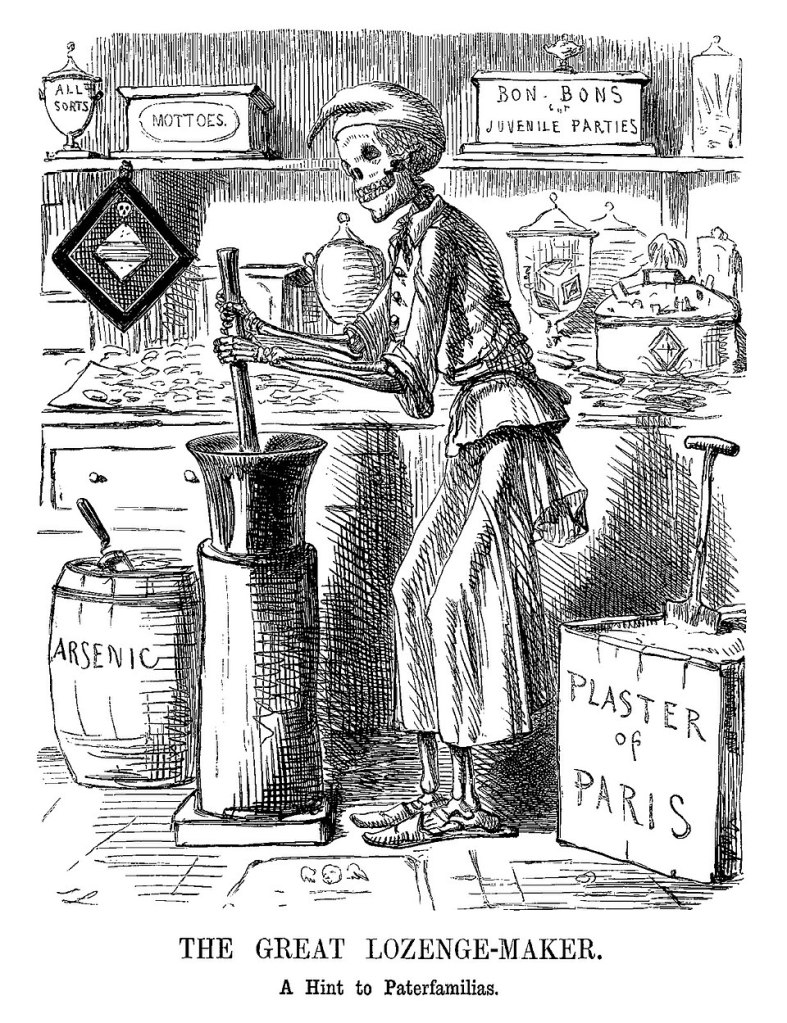
1858–Brigton arsenic poisonings, estimated 200 illnesses, 20 fatalities; difficulty in identifying cases because of coincident outbreak of cholera producing similar symptoms. Dr. John Bell, a local physician, first identified candied lozenges as the common factor in the outbreak. Manufactureres commonly substituted gypsum (used to make plaster of paris) for sugar as a cost saving measure. Just before the outbreak began, a junior assistant at the wholesale pharmacy mistakenly dispensed white arsenic trioxide powder in place of the gypsusm. Dr. Bell employed a chemist to test sample losenges, finding 6 grains (one grain is equal to 64.51 mg) of arsenic (390mg) in each piece of candy.
1880-Toulon, Hyer, France Arsenic Poisoning from Contaminated Wine 15 individuals died in an outbreak of 500 cases of arsenic poisoning due to contaminated wine in the towns of Hyères and Toulon. (JAMA 1932, Neurosciences 2023)
1889. poisoning of an entire Bordeaux village following adoption of coal tar dyes to adulterate wine after Phyloxera struck the French wine industry. Arsenic apparently resulted from arsenic contaminated coal (Oxford News, 1889).
1900 – Manchester, UK,; Wales, Arsenic – arsenic timeline xls Kelvin Commission Report 1902, estimated 6,000 cases, with 70 documented fatalities. Beer contamined with arsenic derived from coal contaminated with arsenic used as fuel in the brewing process or sulfuric acid derived from contaminated coal used to adjust pH.
The commission recommended a residue tolerance for arsenic subsequenlty applied elsewhere: Procedural recommendations included improvement in plant hygiene to limit coal dust and cleaning of screens used in the mash processing. Food tolerance recommendations included a maximum concentration of 1/100th of a grain/gallon of liquid [0.14 ppm] and 1/100th of a grain/pound of food [1.43 ppm].
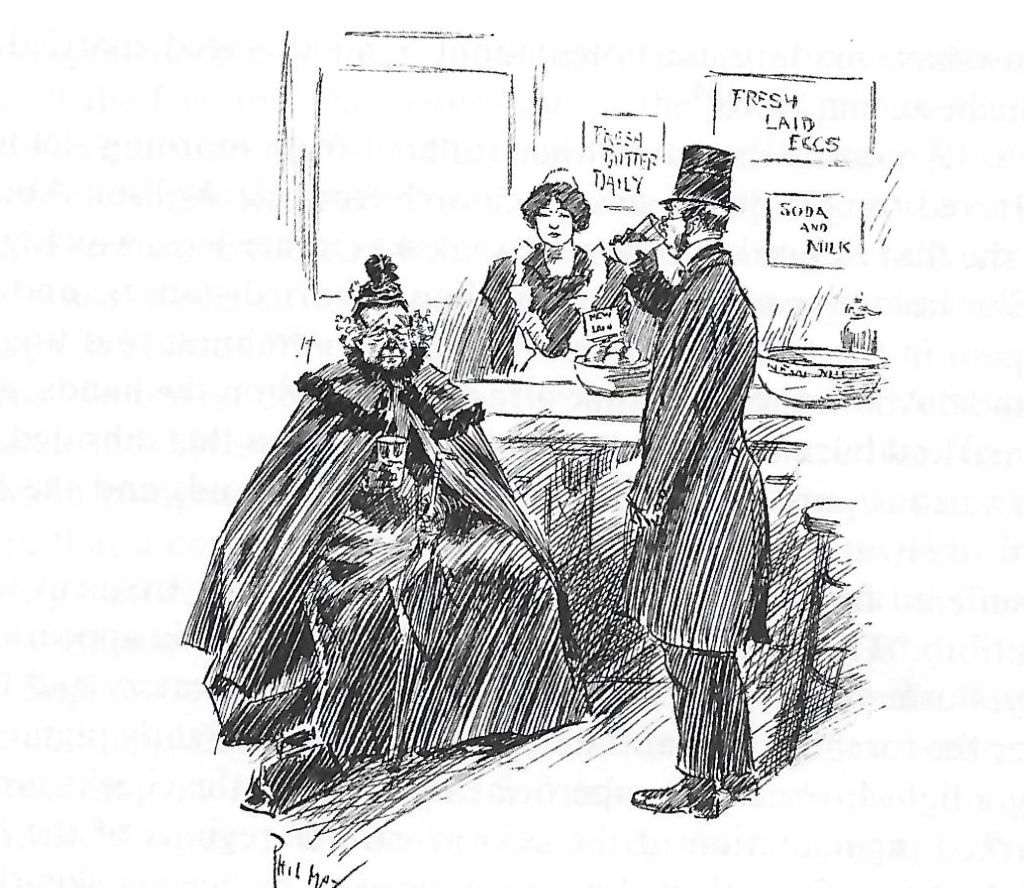
Talkative old lady(drinking a glass of milk, to enthusiastic Teetoaler, who is doing ditto. Yes SIR, SINCE THEY BEGUN POISONING THE BEER, WE MUST DRINK SOMETHING, MUSTN’T WE!!
A UK investigation of illnesses associated with arsenic contaminated American apples in 1925 employed a standard of 1 100th of a grain arsenic per pound of apples as sufficient to prevent acute poisonings based on the 1903 royal commission data.
Routine testing of California produce began in 1926 (HC Heske California CA Director of Food and Ag Nov 9 1926 speech – 59th convention of California fruit growers and farmers; Martin ). The focus on testing exported produce may explain the failure to limit residues in domestic produce and associated poisonings. For example, the 1933 poisoning of diners at a Los Angeles supper club caused by arsenic contaminated broccoli (LA Times, October 19th, 1933).
Other food contamination episodes
1929 – Ten people poisoned by cake made from flour accidentally contaminated with arsenic stored in the same kitchen pantry (NY Times story)
1930 –Child poisoning from Long Island arsenic treated grapes (NY Times story)
1932– An April 23rd NY Times story described 300 cases ot poisoning among officers and crews ot steamers of 2 French companies plying from Havre have been traced by medical experts to arsenic contained in wines distributed as ship rations.For three months sailors had been reported ill in French and foreign ports and twelve cases in a Havre hospital are serious (Arsenic Poisoning from Contaminated Wine – JAMA 1932; Ignacio Suay-Matallana Poisoned Wine: Regulation, Chemical Analyses, and Spanish-French Trade in the 1930s, Ambix, 2018)
The wine, furnished by a local company, was purchased in Spain. Experts state that arsenic may be traced to the use or poison to combat blight on the vines or that arsenic may have been introduced into the vines to diminish acidity.
A June 1932 article in the Journal of the American Medical Association discussed details of the April poisoning, comparing it to the 1900 Manchester poisonings and amass poisoning in Toulon in 1888, causing 500 poisonings and 15 deaths. A 2018 article by Suay-Matallana reviewed a variety of social, political and economic factors that influenced the interpretation of the case (Ambix http://www.tandfonline.com/journals/yamb20).
A 1978 poisoning episode in the Extremadura region of Spain also involved wine contaminated with arsenic (Ramírez-Moreno, Neurosciences and History 2023). The outbreak involved 300 illnesses and 11 fatalities.
A survey of commercial wine purchased in US channels of trade in the published by Wilson (2015 J Env Health) found arsenic in every sample measured and lead in most samples.
A survey of residues of in Spanish Wine (V. Fernández-Fernánde 2025) focused on currently used active ingredients and did not evaluate arsenic or lead. The measured concentrations did not approach the allowable daily intake for any of the compounds.

Structures of arsenic pestices
Arsenical active ingredients registered as pesticides with USEPA & California Department of pesticide regulation
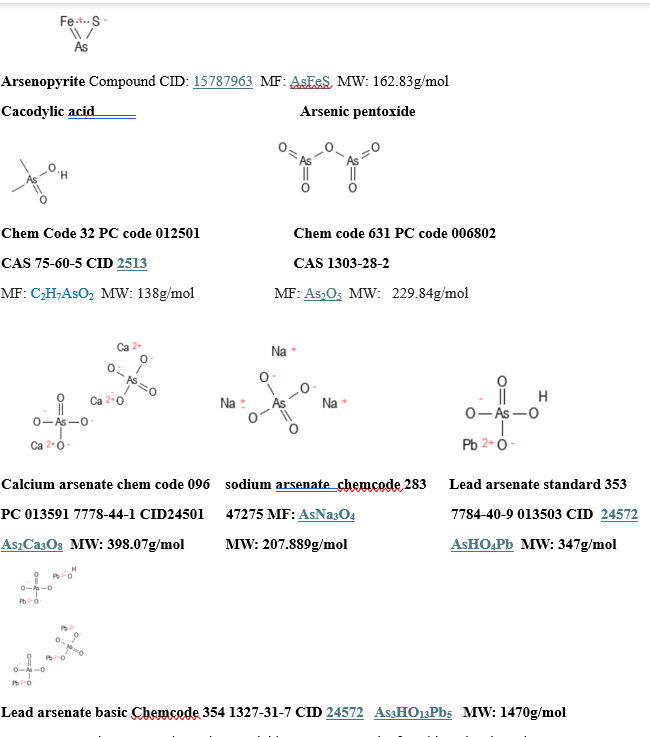
Arsenical active ingredients used as pesticides,
Registration data
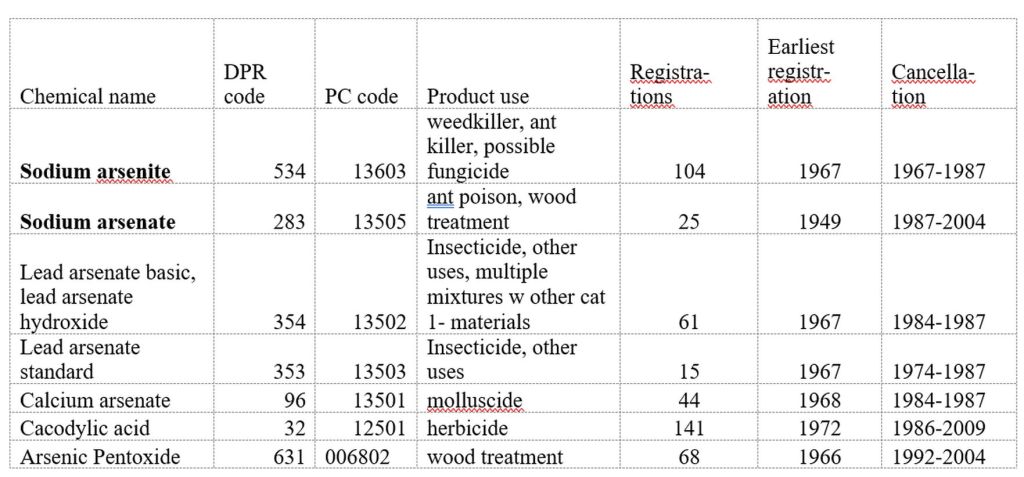
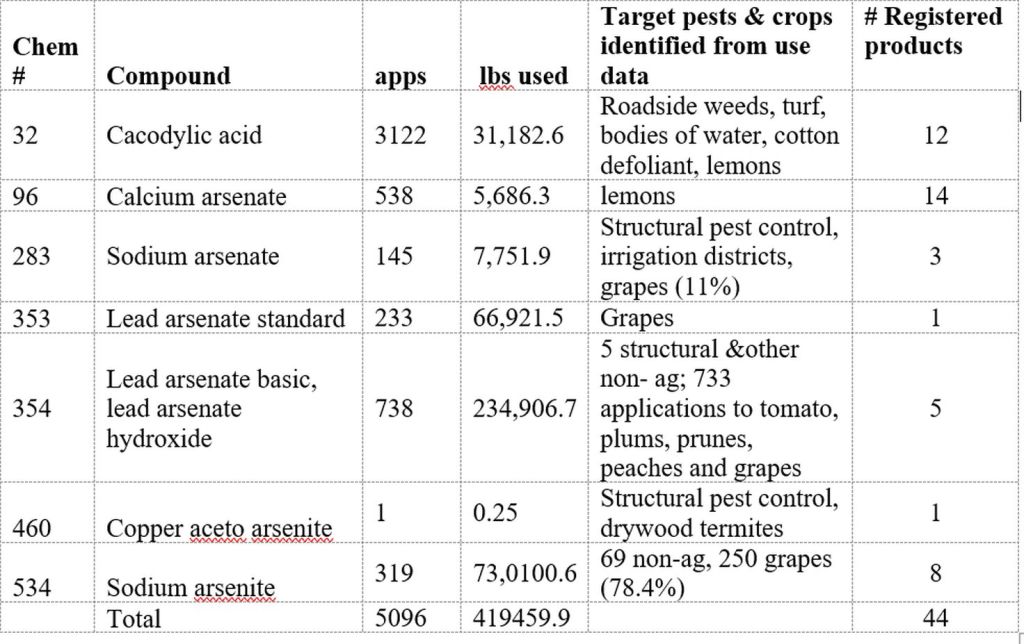
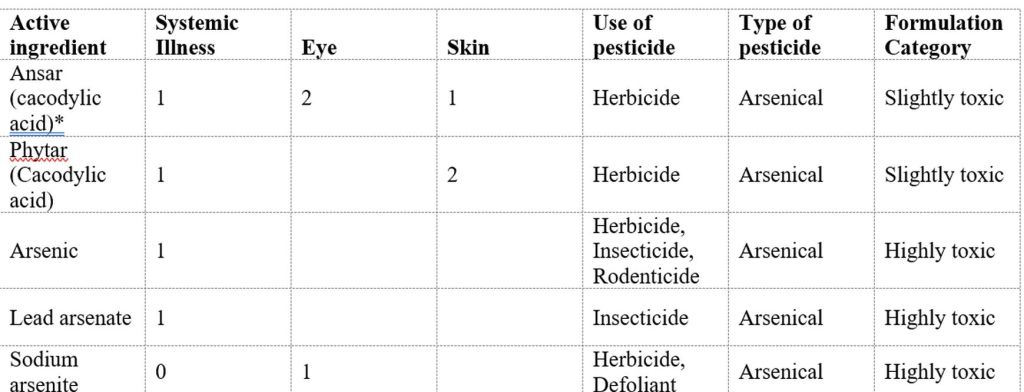
eye & skin irritation, 4 cases of systemic illness
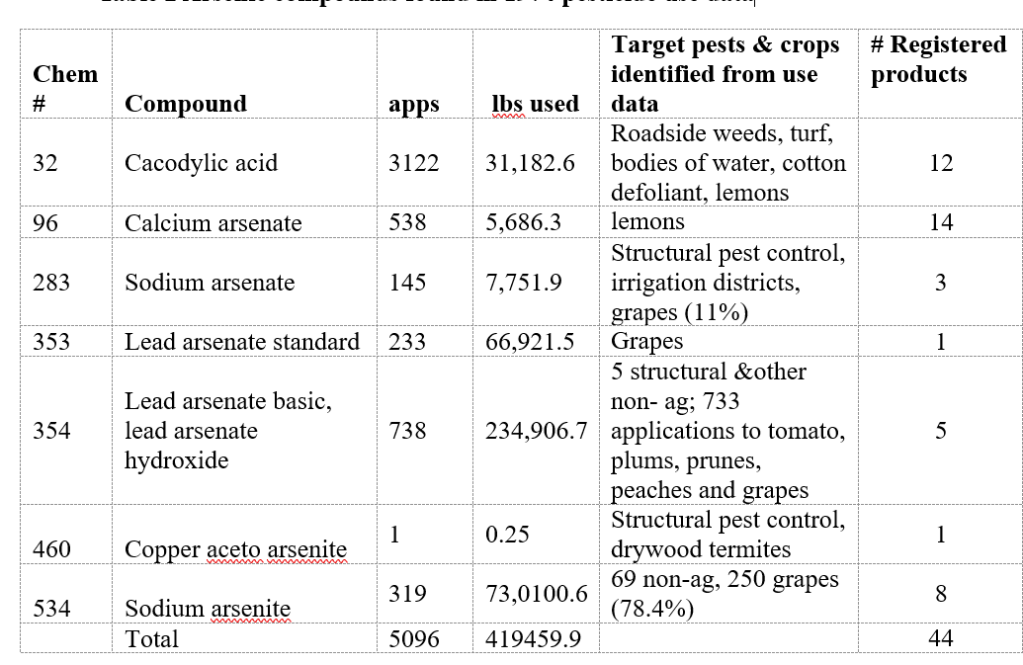
Each AI had a distinct use profile:
Cacodylic acid had principally non-agricultural use, including applications potentially made directly to bodies of water (vector control, water resources, irrigation districts and reclamation districts). Cotton defoliation accounted for most of the agricultural use. Non-ag uses included structural pest control, treatment of roadsides and industrial areas.
Calcium arsenate had only agricultural use, all targeting lemon orchards. Sodium arsenate had non-agricultural use for structural pest control and irrigation districts, with agricultural use only on grapes. Lead arsenate (both standard and basic) had use principally on grapes.
The USEPA label website has a checkbox signaling a restricted use pesticide. Although many labels retrieved from the system carried the signal word DANGER, the restricted use pesticide category did not exist in the 1940’s (the dates of initial registration for the 5 inorganic arsenic salts).
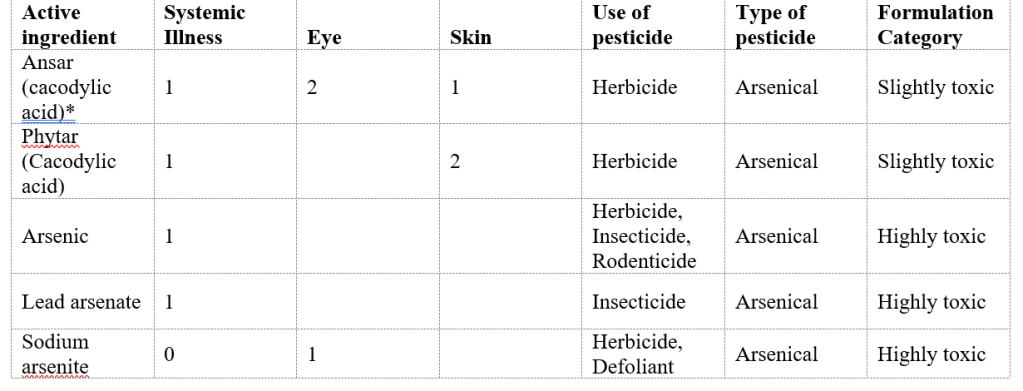
Non-Occupational Illness
Ad hoc reporting from poison centers allowed documentation of non-occupational illnesses. These included cases of childhood ingestion liquid sodium arsenite available for home use reported by Peoples in 1977, initially identified by the Los Angeles Poison Control center, then investigated by the California Department of Health.
Clin Tox 1977 Conference presentation abstract-PS. A. Peoples, K. T. Maddy, L. Johnston, C. Ray and F. Weindler, Agricultural Chemicals and Feed, California Department of Food and Agriculture, Sacramento, California 95814
Detailed evaluation of human poison exposure incidents handled by poison control centers in California revealed that about ten percent o r more were due to pesticides (this term legally includes disinfectants and sanitizers). About ten percent of the pesticide cases were due to ingestion of liquid formulations of sodium arsenite. Detailed records kept by the Los Angeles Poison Information Center revealed that in 1975, within a total of 31,039 poison exposure cases, center records listed 3,401 of these cases as being exposures to pesticides and plant foods. The center sent individual reports to the State Department of’Health on 2,228 pesticide exposure incidents of which 291 were due to liquid sodium arsenite ingestions by people. The largest number (40) occurred in September. The median age of the exposed persons was 1-1/2 years. These incidents have been resulting in large numbers of cases requiring extensive medical attention. Although animal test data on adult male rats indicates that sodium arsenite has an oral LD50 in the 20 to 50 milligrams per kilogram range, it has become evident that ingestion of less than 1 milligram per kilogram can result in serious illness and 2 milligrams per kilogram can lead to the death of a child. In order to eliminate this serious problem , California has taken regulatory action to remove from sale pesticides for home and garden use that contain free-flowing liquid sodium arsenite.
A
 Cholinesterase Monitoring Tools
Leave a comment