Evaluating agricultural workers handling cholinesterase (ChE) inhibiting organophosphate (OP) or carbamate insecticides
Employer have the responsibility to keep records of workers handling ChE inhibiting seconds and monitor exposure by blood tests – red blood cell (RBC) and plasma or serum ChE every 30 days
Each person has a level of ChE varying from test to test 5-10%, although the levels for a large group show a wider variation. Monitoring compares ChE prior to the start of a work season – a baseline test or reference level – to ChE levels taken every 30 days afterwards.
ChE decreased 20% requires employers to review work practices – use of closed mixing and loading systems, protective equipment, etc- and any history of accidents or spill likely to cause a sudden overexposure.
ChE decreased 30% or more requires workers to stop handling ChE inhibitors until levels return to within 10% of the normal level. The ChE monitoring application helps workers and employers communicate with each other, aiming to provide reliable and simple to interpret information
More Details of Requirements under California law – https://www.cdpr.ca.gov/docs/legbills/calcode/030302.htm#a6728
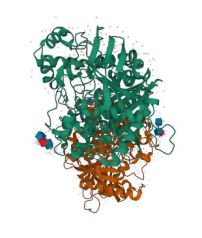
 Cholinesterase Monitoring Tools